
The Power And Wisdom Of The Cross
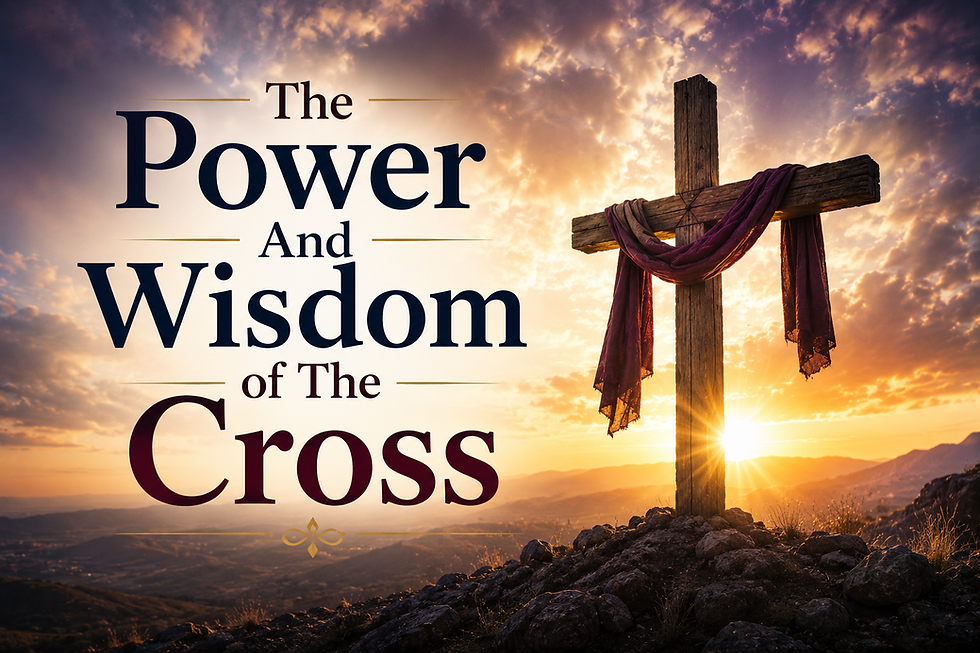
The heart of the New Covenant is found in the cross. It’s the source from which all spiritual gifts flow. The central theme from the book of Genesis to Revelation is the cross and it’s the focus of the redemptive story. Jesus came into this earth wrapped in swaddling cloth in a manger with Shepherds looking on. He was born in the humblest of accommodations with the humblest of professions witnessing his birth.
God stepped into time showing us the way of humility and he ended his journey showing us the way of humility in his surrender to the power and wisdom found in the cross.
The tree of the cross on the hill outside of Jerusalem is the place where Jesus shed his blood and died for our sins. However, what is implied in the statement in I Corinthians 1:18 when Paul spoke of ‘the word of the cross’? The ‘word of the cross’ is a much broader statement than just that Christ died for our sins. It’s the foundation and cornerstone upon which our faith is established (Ephesians 2:20). It is the message of Christ that holds the whole building together in the uniting chord of love centered on him. [1]N.T. Wright comments saying, “the cross is the focal point where the covenant purposes of God reach their climax.”
The word of the cross is Christ birth, life, death, burial, descent into Hades and resurrection from the grave breaking the power of death. It is Christ's ascension to the right hand of the Father and the subsequent outpouring of his Spirit on the day of Pentecost. It is going to bring the final union between God and man being consummated at his second coming to this earth as the ruling king of Kings. It’s the message of the gospel and wrapped in that message is the power and wisdom of God. [2]Thomas Schreiner says, “the death of Christ is the heart of the new covenant.”
The children of Israel were told to eat the whole lamb during the Passover meal. It was so that the lamb who was slain for them, the blood that covered their sin, delivered them from the death angel and set them free from Pharaoh's power would become a part of them (Exodus 12:1-2). In a similar manner we are told to eat the flesh and drink the blood of the New Covenant. It’s a partnership and participation with the Lamb of God. It’s upon the revelation of that foundation that the gates of Hades cannot prevail against his ekklēsia. The pillar and foundation of truth that the ekklēsia is established on is the ‘word of the cross’.
The advancing body of Christ is made up of those who have embraced the message of him who has the keys of death and Hades.
Yes, it's foolishness to the earthly minded man. It’s a stone of stumbling and rock of offense. Jesus and his apostles didn’t preach a message about changing the old man, but they preached the cross. It’s a message about the power of God changing us from the inside out. [3]The cross shapes the identity and mission of the church. It’s about the wisdom of God establishing our lives so that we fulfill the will of God.

Cruciformity is the shape of our existence as believers because the means of salvation are sacrificial, and it's always been that way.
[4]G.K. Beale says, “union with Christ is rooted in participation in his sacrificial death.” Our ancient faith originates out of the soil of sacrifice.
No, we can’t work our way to God, but he does call us to be completely identified with him in a covenant relationship. Jesus said except a seed goes into the ground and dies it abides alone (John 12:24). [5]Participation in Christ’s death is the basis for participation in the Spirit. The message of the gospel which Jesus and his apostles taught was that the pathway to life can only be entered through the doorway of sacrificial death. Just as [6]James D. G. Dunn says, “the Spirit is the gift of the crucified and risen Lord.”
[1] N. T. Wright, Jesus and the Victory of God, p. 609.
[2] Thomas Schreiner, New Testament Theology, p. 293.
[3] Richard Hays, The Moral Vision of the New Testament, p. 36.
[4] G.K. Beale, A New Testament Biblical Theology, p. 671.
[5] Gordon D. Fee, Pauline Christology, p. 590.
[6] James D. G. Dunn, Jesus and the Spirit, p. 312.


Comments